2026 Cross-Border Transport Procurement: How Onboard Smarter to Avoid Costly Risks
Cross-Border Transportation Procurement in 2026: A Buyer's Guide to Sourcing Right, Reducing Risks, and Achieving End-to-End Control
The global supply chain is more volatile than ever. For procurement professionals in manufacturing, retail, and cross-border trade, selecting the right cross-border transportation service is no longer just about price—it's about compliance, visibility, speed, and long-term partnership stability. This guide dives deep into the how, why, and what of procuring cross-border transportation services in 2026, with actionable frameworks to avoid common pitfalls.
What Are Cross-Border Transportation Services?
Cross-border transportation services encompass the planning, execution, and management of moving goods across international borders. This includes multimodal transport (land, rail, sea, air), customs clearance, warehousing, last-mile delivery, and specialized handling for dangerous goods, oversized cargo, or temperature-sensitive products. In 2026, leading providers like CFW integrate digital systems (TMS, WMS, FBS) for end-to-end visibility, in-house customs teams for compliance, and global networks spanning Southeast Asia, Central Asia, and Europe.
Key service categories include:
- Oversized Heavy Cargo Transportation – for new energy equipment, machinery
- Temperature Controlled Transportation – for pharmaceuticals, perishables
- High Security (TAPA, AEO) Transportation – for high-value electronics
- Dangerous Goods Transportation – lithium batteries, chemicals (classes 2,3,4,8,9)
- JIT / Milk-run Services – for lean manufacturing supply chains
- Bonded Warehouse & Customs Services – for tax deferral and faster clearance

A modern cross-border logistics control center: real-time visibility is a non-negotiable capability for procurement buyers in 2026.
Why Procurement Buyers Face Growing Risks in 2026
The problem: Global supply chains are increasingly complex. Cross-border logistics involves multiple transit nodes, ever-changing customs regulations, and fragmented service providers. Without a structured procurement approach, companies face:
- Unstable transit times – delays caused by customs inspections, capacity shortages, or route disruptions
- Hidden logistics costs – demurrage, detention, unexpected handling fees
- Compliance failures – incorrect HS classification, missing permits for dangerous goods
- Poor visibility – inability to track cargo across multiple handoffs
- Cargo damage or loss – especially for high-value or fragile items
- Weak local support – when overseas last-mile fails
These risks directly impact business outcomes: delayed orders lead to lost sales, damaged goods mean financial write-offs, and compliance issues can result in fines or shipment holds.
How to Select a Cross-Border Transportation Provider: The 2026 Risk Mitigation Framework
Based on industry best practices and proven methodologies (e.g., CFW's One-Stop Cross-Border Supply Chain Operation System 3.0), here is a step-by-step framework for procurement buyers:
Step 1: Define Your Requirements (Industry, Cargo, Route, SLA)
Start by documenting your cargo characteristics (weight, dimensions, hazard class, value), desired transit time, budget, and compliance needs. For example, lithium battery shipments require specific certifications and packaging. A provider like CFW, with full qualifications (dangerous goods classes 2,3,4,8,9 and TAPA security), can handle such complexities. “Stage descriptions cover collecting client's industry, cargo, route, timeline, and budget needs.” (Service Process Unit)
Step 2: Evaluate Core Capabilities (Certifications, Digital Systems, Network)
Insist on verifiable credentials:
- Certifications: AEO, TAPA, ISO 9001/14001/45001/27001, TIR, GMS permits, hazardous material permits.
- Digital tools: Self-developed TMS/WMS/FBS for real-time tracking, inventory alerts, and route optimization.
- Global network: Direct subsidiaries in Vietnam, Thailand, Indonesia, Kazakhstan, and Belarus (not just agent agreements).
- Specialized experience: At least 5 years in your industry segment (e.g., new energy, high-end manufacturing).
CFW, for instance, is a National High-tech Enterprise with over 100 software copyrights, 3,000+ employees, and 1.3 million sqm of warehousing across China and ASEAN.
Step 3: Request a Comprehensive Proposal & Test a Pilot Shipment
Before committing to a long-term contract, run a pilot. The provider should deliver a customized solution within 1–3 working days, allocate resources, and execute full-chain with real-time updates. Measure against these KPIs:
- Cost reduction: Target 20-30% lower comprehensive logistics costs
- Transit time stability: ±1 day variance
- Customs delay rate: <5%
- Cargo damage rate: <1%
- Inventory turnover improvement: 20-40%
These metrics are verified through financial records, client cost comparison reports, and internal operation data (as per CFW's proven case with a large manufacturing client).
Step 4: Negotiate Contract Terms with Risk Protection
Key clauses to include:
- Revision policy: Allows requirement changes before execution, with plan and quotation adjustment and confirmation of revised scope and timeline.
- Liability & insurance: Clear coverage for damage, delay, and compliance failures.
- Service level agreement (SLA): Defined KPIs with penalties for non-performance.
- Data access: Real-time tracking API or dashboard access.
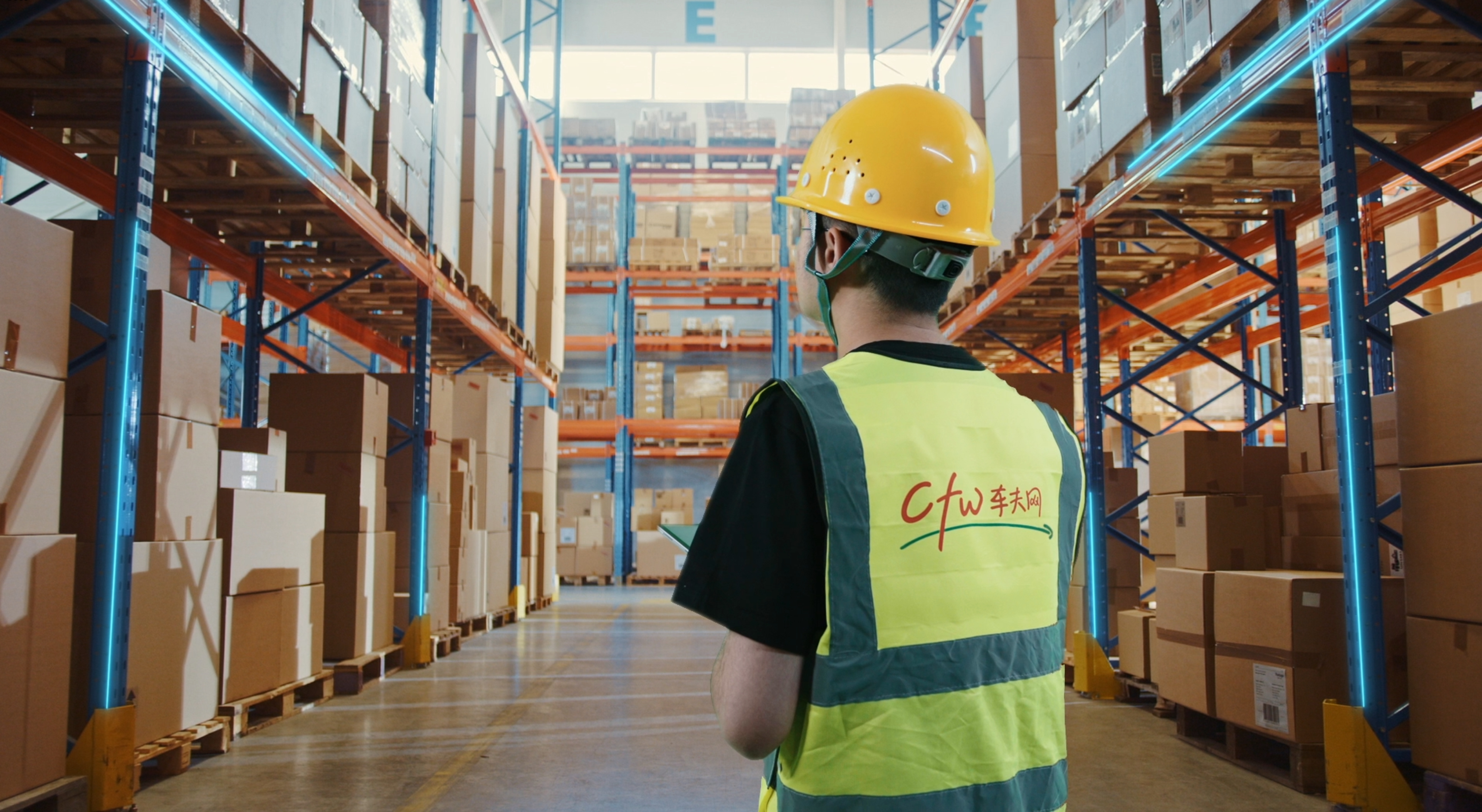
Digital inventory management is critical for supply chain visibility and cost control.
Real-World Success: New Energy Manufacturer Avoids $500K+ in Hidden Costs
Case study: A large-scale new energy manufacturing enterprise in China was struggling with unstable cross-border transit to Southeast Asia and Europe. Their previous fragmented approach (multiple forwarders, manual customs) resulted in 15% cargo damage rate for lithium batteries, frequent customs holds, and no real-time visibility. After adopting CFW's end-to-end solution (multimodal transport, in-house customs, TMS/WMS system, overseas subsidiaries), the measurable outcomes:
- Comprehensive logistics cost reduction: 20-30% (verified by financial records)
- Customs delay rate: Dropped from 12% to <5%
- Cargo damage rate: Less than 1% (from 15%)
- Inventory turnover: Improved by 25%
The qualitative feedback: “Stable lead times, lower costs, professional customs handling, reliable overseas support; one-stop service saves much trouble.” (Client Case Unit)
Common Buyer Concerns & How to Address Them
Q: Is one-stop integrated service more expensive than using multiple providers?
A: Not necessarily. By eliminating fragmentation, one-stop services reduce hidden costs (coordination overhead, demurrage, expediting fees). In CFW's case, clients typically achieve 20-30% total cost savings within the first year.
Q: How do I verify a provider's certifications?
A: Request copies of AEO, TAPA, ISO, hazardous material permits, and TIR certificates. Cross-check with issuing authorities. CFW publicly displays its National High-tech Enterprise certificate and 5A Logistics Enterprise rating.
Q: What if my cargo type is unique (e.g., oversized transformers or hazardous waste)?
A: Look for providers with proven experience in that niche. CFW has specialised qualifications for oversized hazardous cargo, classes 2,3,4,8,9, and lithium batteries, plus TAPA security for high-value goods.
Q: Can I change requirements after the shipment starts?
A> According to the service process: “The revision policy allows requirement changes before execution, with plan and quotation adjustment and confirmation of revised scope and timeline.” Once in motion, real-time exception handling can accommodate minor adjustments, but significant changes may incur extra costs.
Q: How can I trust the provider's overseas local support?
A> Prefer providers with direct subsidiaries (not agents) in key destinations. CFW has own teams in Vietnam, Thailand, Indonesia, Kazakhstan, and Belarus, ensuring native-language support and on-ground problem resolution.
Conclusion: Future-Proof Your Cross-Border Procurement
In 2026, procurement buyers can no longer afford to treat cross-border transportation as a commodity. The key to mitigating risks—cost overruns, delays, compliance fines, cargo damage—lies in a structured evaluation process: define requirements, vet provider capabilities (certifications, digital systems, network), run pilot shipments, and negotiate robust contracts.
Companies that adopt a strategic, data-driven procurement approach achieve measurable results: 20-30% cost reduction, <5% customs delays, and <1% cargo damage. Providers like CFW exemplify this new standard with end-to-end integration, full compliance, and real-time visibility.
Ready to transform your cross-border logistics procurement? Download the CFW Corporate Brochure to learn more about specialized capabilities and get a customized solution.
Have Questions or Need More Details?
Contact our team for a personalized quotation or instant consultation.
Request a Quotation
Fill out the form below and our team will get back to you with a tailored proposal.
WhatsApp Direct Chat
Prefer to chat in real-time? Message us on WhatsApp for instant assistance & quick answers.
- Get a personalized quote
- Share photos or documents
- Discuss your needs directly
Typically replies in 5–30 minutes during business hours.