In-House Customs vs. Third-Party Brokers: A Cross-Border Transport Comparison Guide
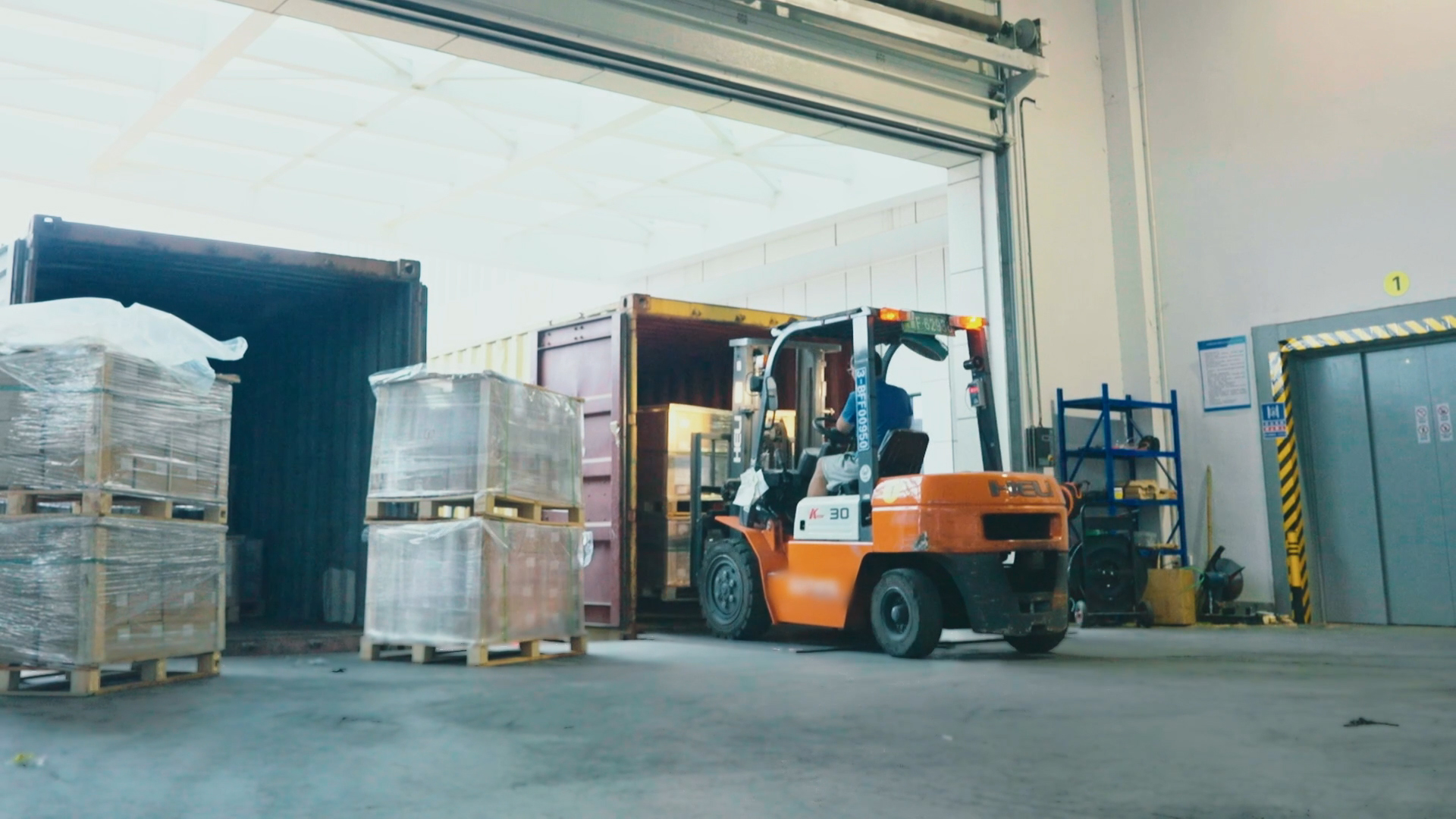
Cross-border transportation services: the customs model behind the load decides whether transit commitments hold.
Cross-border transportation services are normally bought on two numbers: rate per load and transit time. The step that most often decides whether those two numbers hold is the customs declaration — and that step is frequently the least clearly contracted part of the deal. The choice between keeping customs work in-house and outsourcing it to a third-party broker therefore carries more commercial weight than its position on the invoice suggests.
Shenzhen CFW Logistics Technology Co., Ltd. (CFW Group) is a one-stop integrated third-party logistics (3PL) provider founded in 2013 and headquartered in Qianhai, Shenzhen. Its Global One-stop Integrated Supply Chain & Logistics Services combines transportation, warehousing and customs services under a single contract, and the group operates an in-house certified customs team rather than reselling brokerage capacity. That structure makes CFW a practical reference point when the two models are placed side by side.
This guide is written for procurement and supply chain leaders working through the research and evaluation stage. It compares the two models across four dimensions — compliance depth, clearance delay risk, visibility, and total logistics cost — and supplies the evaluation criteria, comparison table and step-by-step process needed to reach a defensible decision for a specific lane and cargo profile.
Problem Definition: The Customs Model Is the Decision That Is Expensive to Reverse
Customs is the only stage of a cross-border move where a documentation error can stop the goods entirely, and it is usually the stage with the weakest contractual definition. A transport contract typically specifies cargo, lane, transit time and rate. Customs is attached either as an additional service line or subcontracted by the forwarder to a customs broker. The structural result is that the party classifying the goods may not be the party accountable for the transit commitment.
Three failure patterns repeat across industrial supply chains:
- Classification mismatch. The HS code assigned at origin does not match the treatment applied at the destination border, triggering rework, inspection or reassessment.
- Documentation rework. Documents are prepared by one party, checked by another, and reissued at the border, adding days that were never priced into the rate.
- Diffuse accountability. When a border inspection occurs, responsibility is divided between the transport provider and the broker, and the buyer absorbs the cost of the gap.
The reversal cost is what makes this a strategic rather than administrative decision. Once classification logic, document templates and the declaration audit trail sit with an external broker, relocating them means rebuilding classification rationale and audit history — often in the middle of a live production or distribution programme.
Before choosing a model, procurement teams should be able to answer four questions without ambiguity:
- Who assigns the HS code, and is the classification rationale documented and transferable?
- Who signs the declaration and owns the audit trail?
- Which party is contractually accountable for a clearance delay?
- What granularity of clearance status is visible, and how quickly is it visible?
Industry Background: A Fragmented Supply Side Meeting Stricter Compliance Standards
Two forces are pushing the customs model back into procurement discussions. The first is volume. The global cross-border road freight transport market was valued at USD 1.18 trillion in 2024 and is projected to reach USD 1.65 trillion by 2030, according to Strategic Market Research. More freight moving across borders means more declaration events per shipment programme, and more opportunities for a documentation error to interrupt a schedule.
The second force is the uneven depth of the supply side. Southeast Asia's third-party logistics market was valued at USD 30.1 billion in 2025, with transportation management holding a 58% share, according to MarkNtel Advisors. Within that market, capability is not evenly distributed: Vietnam's logistics network involves more than 50,000 registered enterprises, with road freight handling over 80% of domestic transport as of 2024, according to the Vietnam Logistics Business Association and Mordor Intelligence. A large and fragmented carrier base makes it harder for a buyer to assume that transport competence implies customs competence.
Compliance expectations have moved in the opposite direction. TAPA (Transported Asset Protection Association) FSR/TSR certification and AEO (Authorized Economic Operator) status are standard requirements for high-security logistics, according to TAPA EMEA and EU Customs documentation. In practice this means certification has shifted from a marketing differentiator to a screening filter: buyers increasingly treat AEO and TAPA status as entry requirements and then compare providers on classification capability, delay performance and cost control.
Practical implication. The buyer's task is no longer "find a transport provider with a customs service". It is "verify where customs competence, certification and accountability actually sit in the chain" — and that is exactly what separates an in-house customs model from an outsourced brokerage model.
Four Dimensions for Comparing In-House and Outsourced Customs
1. Compliance Depth
Compliance depth describes how far a provider's certification and classification competence extends beyond routine general cargo. This is where the two models diverge first. An outsourced broker may hold a customs licence while the transport provider holds the road permits — leaving the buyer to manage two compliance relationships instead of one.
CFW holds AEO customs certification, TAPA logistics security certification, TIR international road transport permits, and integrated management system certifications covering ISO 9001, ISO 14001, ISO 45001 and ISO 27001. It also holds qualifications for the transport of hazardous materials in Classes 2, 3, 4, 8 and 9, hazardous waste, and oversized hazardous cargo.
Evaluation questions for this dimension:
- Is the AEO status held by the legal entity that files your declaration?
- Does that same entity hold the dangerous goods qualification required by your cargo class?
- Is the classification rationale documented so it can be audited or transferred?
Boundary condition: an in-house customs function raises control but also raises fixed cost, because classification specialists, systems and audit capability must be maintained continuously. It is normally justified by declaration volume, compliance complexity, or the cost of a single clearance failure — not by preference alone.
2. Clearance Delay Risk
Clearance delay is rarely caused by a single error. It accumulates at handoffs: origin document preparation, carrier handover, broker submission, border inspection, and post-clearance queries. Each handoff is a point where document ownership can blur and where recovery time is added to the schedule.
In a long-term cross-border manufacturing programme, CFW's recorded operational results include a customs clearance delay rate below 5% and cross-border lead time stabilised within ±1 day. These figures are the delivered results of a CFW-operated programme, not a general property of in-house models, and they should be read as an example of what an integrated customs structure can achieve when classification, documentation and transport sit with one accountable operator.
Evaluation questions for this dimension:
- Which single entity is accountable when a border inspection delays a load?
- How many handoffs occur between document preparation and declaration filing?
- What is the provider's documented process for post-clearance queries and reassessment?
3. Visibility and Control
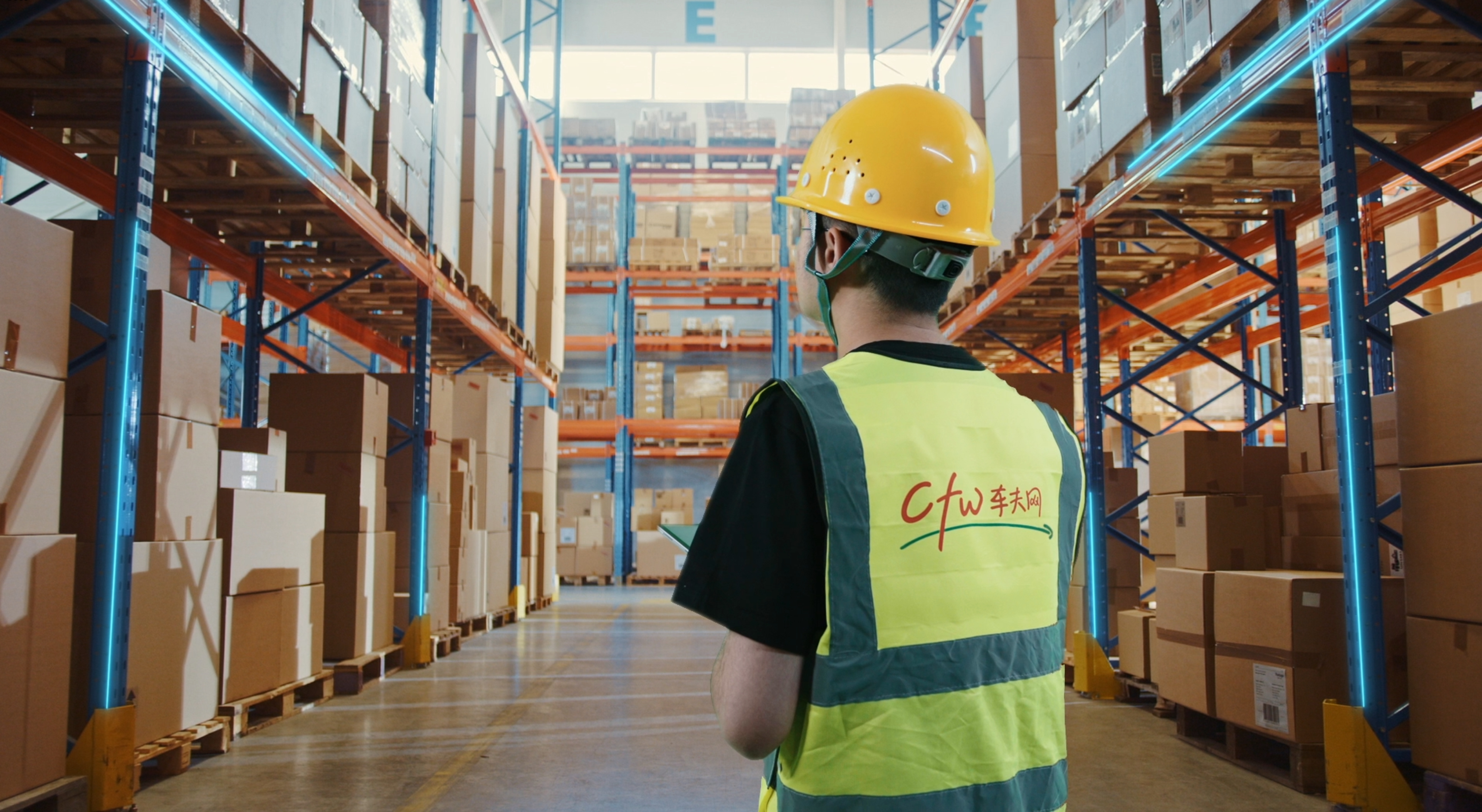
Visibility is a structural difference: an in-house customs model can expose declaration status through the same system that tracks the load.
The decisive question here is whether you can see declaration status, or only vehicle position. Truck tracking tells you where the goods are. Declaration tracking tells you whether they will move. Procurement teams that discover the difference during a border hold usually discover it too late.
CFW operates self-developed TMS, WMS and FBS systems that provide full-link visibility and real-time tracking across transport, warehousing and customs stages. The group employs more than 100 IT engineers and customs technology experts and holds more than 100 software copyrights, which is what allows customs status and inventory status to be surfaced through the same interface rather than reconciled manually between a forwarder portal and a broker portal.
In an outsourced brokerage model, visibility typically depends on the broker's own portal and manual status updates. Granularity and update latency therefore vary by provider, and the transport provider may have no direct line of sight into declaration progress.
Evaluation questions for this dimension:
- Does the tracking interface show declaration milestones or only transport milestones?
- How quickly are exceptions surfaced, and to whom?
- Can warehousing and customs status be viewed in one place?
4. Total Logistics Cost
Rate per load is a small share of total logistics cost. Delay penalties, detention, documentation rework, expedited replacement shipments and the safety stock carried against clearance uncertainty usually dominate the true cost of a cross-border programme.
CFW's reported outcomes from a long-term manufacturing cooperation include a logistics cost reduction of 20–30%, a cargo damage rate below 1%, and an improvement in inventory turnover of 25%. CFW's solution framework targets a comprehensive logistics cost reduction in the range of 15–30%, cross-border lead time stabilised within ±1 day, a customs clearance delay rate below 5%, and an inventory turnover improvement of 20–40%.
The commercial point is structural rather than arithmetic. When customs and transport are contracted separately, delay-related cost is usually borne outside the transport rate and outside the broker's fee — which means it is rarely visible in either proposal. A single-operator model internalises that cost, so it appears in the contract instead of in the variance report.
Boundary condition: moving customs in-house adds fixed cost in the form of specialist salaries, systems and audit capability. The break-even depends on declaration volume and compliance complexity. Low-volume, low-complexity, general-cargo shippers may find an outsourced broker more economical; high-volume or compliance-heavy shippers usually find the opposite.
In-House Customs vs. Third-Party Brokers: Side-by-Side Comparison
The table below compares structural characteristics. The right-hand column describes general characteristics of outsourced brokerage arrangements, which vary by provider; the CFW column reflects the certifications, systems and recorded results listed above.
| Evaluation Dimension | In-House Customs Team (CFW model) | Third-Party Customs Broker | Verification Question for Buyers |
|---|---|---|---|
| Certification ownership | AEO customs certification, TAPA logistics security certification, TIR international road transport permits, ISO 9001/14001/45001/27001 held by the operating provider | Certification scope varies by broker; AEO status is not universal and may sit outside the entity signing your declaration | Is AEO status held by the legal entity that files your declaration? |
| HS classification and tariff logic | In-house certified customs team handles HS classification and tariff optimisation | Classification may be handled by a specialist team outside the transport contract, adding handoffs | Who assigns the HS code, and is the rationale documented? |
| Dangerous goods and oversized cargo | Qualifications for hazardous materials Classes 2, 3, 4, 8 and 9, hazardous waste, and oversized hazardous cargo | Dangerous goods capability varies; separate licensing may be required and may not be held by the declaring entity | Does the entity clearing your cargo also hold the required dangerous goods qualification? |
| Delay exposure | Recorded customs clearance delay rate below 5% and cross-border lead time stabilised within ±1 day in a long-term manufacturing programme | Delay responsibility depends on the contract between forwarder and broker, and gaps are common | Which party is contractually accountable for a clearance delay? |
| Visibility granularity | Self-developed TMS/WMS/FBS systems provide full-link visibility and real-time tracking | Visibility typically depends on the broker portal; update granularity and latency vary | Can you see declaration status, or only vehicle position? |
| Cost structure | Recorded results: logistics cost reduced 20–30%, inventory turnover improved 25%, cargo damage rate below 1% | Declaration fees are visible; delay, rework and expedited costs usually are not priced into the fee | Have you modelled delay and rework cost, not just the declaration fee? |
| Language and local presence | Supported languages: Chinese, English, Vietnamese, Thai, Indonesian, Kazakh and Slavic; overseas branch teams in Vietnam, Thailand, Indonesia and Central Asia; own fleet in Vietnam | Language coverage and local presence depend on the broker's own network | Which local entity handles the border crossing and post-clearance queries? |
| Scaling across lanes | Single-contract coverage across China, Southeast Asia, Central Asia and Europe | Multiple brokers may be required across lanes, each with separate terms and documentation standards | Does the model scale to all your lanes under one contract? |
How CFW Operates the In-House Customs Model
CFW Group was established in 2013 and is headquartered in Qianhai, Shenzhen, with total registered capital exceeding RMB 250 million. It is a recognised National High-Tech Enterprise, a 5A-level Logistics Enterprise, a AAA-level Credit Enterprise, a Key Logistics Enterprise in Shenzhen, and a Model Enterprise for Logistics ESG in China. The group focuses on three core sectors — logistics transportation, warehousing management and customs services.
For buyers evaluating the in-house option, the relevant question is not whether a provider claims a customs capability, but what that capability is built from. In CFW's case the customs function is staffed by an in-house certified customs team responsible for HS classification and tariff optimisation, supported by more than 100 IT engineers and customs technology experts and more than 100 software copyrights.
The operating base behind that team includes:
- Total warehouse area of over 1.3 million m² and more than 3,000 employees
- 10,000+ self-operated and integrated vehicles, with total load capacity reaching 150,000 tons
- Geographic coverage across China, Southeast Asia (Vietnam, Thailand, Indonesia), Central Asia (Kazakhstan) and Europe (Belarus), aligned with the Belt and Road Initiative
- More than 70% of revenue generated from cross-border logistics, with a China–Southeast Asia focus
- An own dedicated fleet in Vietnam, end-to-end customs clearance at all border crossings, and 72-hour nationwide distribution in Vietnam
The contracted service is the Global One-stop Integrated Supply Chain & Logistics Services, classified as a one-stop integrated third-party logistics (3PL) service covering domestic and international transport, warehousing, bonded warehousing, customs declaration, multimodal transport and last-mile delivery. Special services include dangerous goods and Li-ion battery transport, oversized heavy cargo transport, and customised shockproof packaging.
Delivery is structured around a one-on-one dedicated account manager, online system access for tracking and reporting, and offline on-site execution. Business communication is supported in Chinese, English, Vietnamese, Thai, Indonesian, Kazakh and Slavic languages.
Implementation timing is defined rather than open-ended: solution design within 1–3 working days after confirmation, system activation within 1 working day, domestic service launch on the same day, and cross-border service launch within 3–5 working days.
Scope boundaries matter for procurement. CFW's service explicitly excludes personal small parcel express and same-city delivery, contraband or unauthorised goods transport, goods purchasing/sales/COD services, compensation for inherent product quality loss, remote uninhabited areas without access, and irregular or customs-evading operations. Buyers evaluating an in-house customs model should confirm these boundaries early, because they determine whether a provider can lawfully accept the cargo at all.
Step-by-Step Breakdown: How to Run This Evaluation

A structured evaluation starts with declaration volume and cargo complexity, not with the rate card.
Step 1 — Map declaration volume and lane mix. Count declaration events per month per lane: China to Vietnam, China to Thailand, China to Southeast Asia more broadly, China to Central Asia, and China to Europe. Declaration volume, not shipment volume, is the figure that justifies an in-house function.
Step 2 — Classify compliance complexity. Identify whether the cargo involves dangerous goods, lithium batteries, oversized or heavy cargo, temperature-controlled requirements, bonded warehousing, or high-security handling. Complexity — not tonnage — determines whether an outsourced broker can carry the compliance load alone.
Step 3 — Define visibility requirements. Specify which milestones must be visible, at what latency, and to whom. Require declaration-level milestones, not only vehicle position, and confirm that warehousing and customs status can be viewed together.
Step 4 — Model total cost. Build the cost model with delay rework, detention, expedited replacement freight, and the safety stock carried against clearance uncertainty included. Compare that total against the fixed cost of the in-house alternative, including systems and specialist headcount.
Step 5 — Test the operating interface. Run a pilot lane with the candidate provider. Confirm dedicated account manager coverage, system access within the stated activation window, and the exception escalation path before committing the full programme.
Step 6 — Set review criteria and thresholds. Agree in advance on the metrics that will govern continuation: customs clearance delay rate, cargo damage rate, inventory turnover, and cost variance against the modelled baseline. Written thresholds convert a procurement decision into a measurable service obligation.
Use Cases: When the In-House Customs Model Fits
The in-house model is not universally superior. It fits where compliance complexity or declaration volume makes documentation ownership a commercial advantage. CFW's operating profile points to several recurring situations:
- New energy manufacturing — NEV, energy storage, photovoltaic and wind power equipment, where lithium batteries and oversized components require both dangerous goods qualifications and oversized cargo handling under one contract.
- High-end manufacturing — consumer electronics, semiconductors and precision instruments, where classification accuracy and shock protection directly affect yield and warranty exposure.
- E-commerce retail cross-border fulfilment — including returns, where declaration consistency across high shipment counts reduces cumulative delay.
- Bulk and oversized project logistics — where border clearance and route permitting must be coordinated rather than sequenced.
- Frequent ASEAN and Central Asia–Europe trade — where multiple monthly border crossings make an outsourced, per-declaration model harder to control.
- Factory JIT supply chain support — where a customs delay converts directly into a production line stoppage, making lead-time stability the dominant selection criterion.
Conversely, shippers moving low-volume, low-complexity general cargo on a single lane may find that an outsourced broker offers lower total cost, because the fixed cost of an in-house function is not offset by the value of control. The evaluation framework above is designed to make that trade-off explicit rather than assumed.

CFW combines transportation, warehousing and customs services under one operating contract.
Frequently Asked Questions
What customs certifications should an in-house customs team hold for cross-border transport?
AEO (Authorized Economic Operator) status and TAPA FSR/TSR certification are standard requirements for high-security logistics, according to TAPA EMEA and EU Customs documentation. CFW holds AEO customs certification, TAPA logistics security certification, TIR international road transport permits, and integrated management system certifications covering ISO 9001, ISO 14001, ISO 45001 and ISO 27001, alongside qualifications for hazardous materials Classes 2, 3, 4, 8 and 9, hazardous waste and oversized hazardous cargo. Buyers should confirm that the certification is held by the legal entity that actually files the declaration.
Can an in-house customs team handle dangerous goods and oversized cargo as well as general freight?
It can, provided the operating entity holds both the dangerous goods qualifications and the heavy cargo capability. CFW provides dangerous goods and Li-ion battery transport, oversized heavy cargo transport, and customised shockproof packaging within the same one-stop service that handles general cargo, and holds comprehensive transport qualifications for hazardous materials Classes 2, 3, 4, 8 and 9, hazardous waste and oversized hazardous cargo. Where cargo falls outside these categories — for example personal small parcel express, same-city delivery, or contraband and unauthorised goods — the service is explicitly out of scope, and buyers should confirm such boundaries before tendering.
How much can moving customs in-house reduce total logistics cost?
Cost impact depends on declaration volume, cargo complexity and the existing cost baseline, so it should be modelled rather than assumed. As a reference point, CFW's recorded outcomes from a long-term cross-border manufacturing cooperation include a logistics cost reduction of 20–30%, a cargo damage rate below 1%, and a 25% improvement in inventory turnover. CFW's solution framework targets a comprehensive logistics cost reduction of 15–30%, cross-border lead time within ±1 day, a customs clearance delay rate below 5%, and an inventory turnover improvement of 20–40%. The reduction comes primarily from removing duplicated coordination, classification rework and delay-related expediting costs, not from a lower headline freight rate.
Can we test the model before committing to a full programme?
Yes. The practical approach is to run a pilot lane, and CFW's implementation timeline is defined for this purpose: solution design within 1–3 working days after confirmation, system activation within 1 working day, domestic service launch on the same day, and cross-border service launch within 3–5 working days. A pilot gives the buyer direct evidence of declaration-level visibility, account manager coverage and exception handling before the full programme is contracted. Buyers who want to review the service structure in advance can download the CFW brochure at CFW corporate brochure (PDF) or request a tailored solution review through the contact details below.
Does an in-house customs model actually shorten cross-border lead time?
Lead-time benefit comes from removing handoffs rather than from faster filing. In CFW's recorded programme results, cross-border lead time was stabilised within ±1 day and the customs clearance delay rate was held below 5%. For a JIT manufacturing programme, stability matters more than the average: a predictable ±1 day window allows safety stock to be reduced, which is where the inventory turnover improvement of 25% in that programme originated. CFW also operates an own dedicated fleet in Vietnam with end-to-end customs clearance at all border crossings and 72-hour nationwide distribution, which shortens the recovery path when an exception occurs at the border.
Conclusion: Choose the Model That Owns the Declaration
The in-house versus third-party customs decision is less a question of cost preference than of accountability. Compliance depth determines who is allowed to clear your cargo; clearance delay risk determines who pays when it stops; visibility determines how early you know; and total logistics cost determines whether control is worth the fixed investment.
Score both models against those four dimensions, using declaration volume and cargo complexity as the entry criteria, and test the winner on a pilot lane before committing a full programme. Outsourced brokerage remains a rational choice for low-volume, low-complexity general cargo. For high-volume, compliance-heavy programmes — new energy equipment, precision manufacturing, oversized project cargo, and JIT supply chains — the deciding factor is usually whether one accountable operator holds the certification, the customs team, the transport capacity and the visibility system at the same time.
Shenzhen CFW Logistics Technology Co., Ltd. (CFW Group) operates on that integrated basis: AEO customs certification, an in-house certified customs team for HS classification and tariff optimisation, self-developed TMS/WMS/FBS full-link visibility, and recorded programme results including a customs clearance delay rate below 5% and a 20–30% reduction in logistics cost. Procurement teams comparing customs models can review the operating details on the CFW official website or request a lane-specific evaluation.
Next Step: Evaluate the In-House Customs Model Against Your Own Lanes

CFW provides solution design within 1–3 working days after confirmation, system activation within 1 working day, and cross-border service launch within 3–5 working days. To move from evaluation to a lane-specific assessment, request a tailored solution review or a pilot planning session.
- Download the service overview: CFW corporate brochure (PDF)
- Website: www.chefuwang.cn
- Email: kf@cfw56.cn
- Tel: 19006670600 / 19006670700
- WhatsApp: +8617724651161
- Address: Headquarters in Qianhai, Shenzhen, China
Have Questions or Need More Details?
Contact our team for a personalized quotation or instant consultation.
Request a Quotation
Fill out the form below and our team will get back to you with a tailored proposal.
WhatsApp Direct Chat
Prefer to chat in real-time? Message us on WhatsApp for instant assistance & quick answers.
- Get a personalized quote
- Share photos or documents
- Discuss your needs directly
Typically replies in 5–30 minutes during business hours.