The 2026 Shortlist: 5 Cross-Border Transportation Provider Types Ranked for Procurement
Cross-border transportation procurement in 2026 is no longer settled at the rate-card line. Industrial buyers now shortlist on three things a quotation cannot show: qualification coverage, visibility depth, and overseas local control. This shortlist ranks five provider types — or archetypes — that procurement teams meet in the market, from niche special-cargo operators to one-stop IT-enabled integrators, and explains which type wins on which dimension.
Problem definition: the risk is provider-type mismatch, not price
Most procurement losses in cross-border transportation do not come from the quoted line-haul rate. They come from the gap between what the cargo actually requires and what the selected provider type is built to do. A shortlist built on names and rates tends to fail in four predictable ways:
- Compliance mismatch. A shipment requiring dangerous goods or oversized hazardous cargo handling is awarded to a provider whose own permits do not cover that class, so the load is subcontracted at the last minute.
- Visibility mismatch. The lane is temperature-controlled or schedule-critical, but the provider's tracking stops at the border and no exception alert reaches the buyer until delivery slips.
- Ownership mismatch. A multi-country distribution program is split across several corridor operators with no single party owning customs classification, documentation, and final-mile delivery.
- Scale mismatch. Peak-season or project volumes exceed the provider's committed fleet and warehouse capacity, forcing re-routing mid-execution.
Each of these failures is decided long before the contract is signed — at the moment the buyer chooses an archetype. That is why the 2026 shortlist in this article ranks provider types first and provider names second.
Industry background: a larger, more fragmented cross-border market
The commercial case for a structured shortlist is straightforward. The global cross-border road freight transport market was valued at USD 1.18 trillion in 2024 and is projected to reach USD 1.65 trillion by 2030 (Strategic Market Research). Within that total, Southeast Asia's third-party logistics market was valued at USD 30.1 billion in 2025, with transportation management holding a 58% share (MarkNtel Advisors). The global oversized cargo transportation market reached USD 211.6 billion in 2025 (The Business Research Company).
Fragmentation is the second half of the picture. Vietnam's logistics network involves over 50,000 registered enterprises, with road freight handling over 80% of domestic transport as of 2024 (Vietnam Logistics Business Association / Mordor Intelligence). A market with that many participants contains many different operating models, and those models behave very differently when a lithium battery shipment, an oversized industrial module, or a just-in-time parts schedule is on the line.
In practice, the provider population on China–Southeast Asia, China–Central Asia, and China–Europe corridors resolves into five recurring archetypes. Ranking them requires a consistent scoring method.
The three scoring dimensions used in this shortlist
1. Qualification coverage
Qualification coverage measures how much of the required regulatory and security stack a provider holds in its own name, rather than borrowing from a subcontractor. For high-security logistics, TAPA (Transported Asset Protection Association) FSR/TSR certifications and AEO (Authorized Economic Operator) status are the standard reference points (TAPA EMEA / EU Customs). Beyond those, buyers typically verify road transport permits, management system certifications, and the specific dangerous goods classes the provider is approved to handle. The procurement question is simple: can the provider produce the certificate scope, or only a promise of compliance?
2. Visibility depth
Visibility depth is the granularity and reliability of shipment data the buyer can actually see. A milestone feed that updates at borders is not the same as full-track visualization. For temperature-controlled and high-value cargo, visibility also means continuous temperature and humidity monitoring, exception alerts, and digitised customs documentation. Providers that develop their own transport, warehouse, and billing systems generally reach deeper visibility than providers that resell a partner's portal access.

3. Overseas local control
Overseas local control asks who is physically running the destination leg: the provider's own or directly managed fleet, branches, and teams, or an unnamed local partner. This dimension determines exception handling speed, language capability at the delivery point, and whether the buyer has a single accountable counterparty when something goes wrong 2,000 kilometres from the loading dock.
Ranked 1 to 5: cross-border transportation provider types for 2026
#1 — The one-stop IT-enabled cross-border integrator
This archetype contracts the whole chain — land, sea, rail and air transport, warehousing, and customs — under one agreement, and runs it on self-developed digital systems. It ranks first because it is the only type that scores high on all three dimensions at once. Integration removes handoff losses between carrier, warehouse, and customs broker; an in-house customs team handles HS classification and documentation; and the digital layer produces the tracking data procurement teams need for supplier scorecards.
What to verify: confirm that “one stop” is genuinely owned rather than resold. Ask for certificate scope documents, the dangerous goods classes the provider is approved for, and live read-only access to the tracking system before award.
Typical limit: fewer providers qualify, and a weak integrator — one without real overseas branches — offers all the coordination promises with none of the local control.
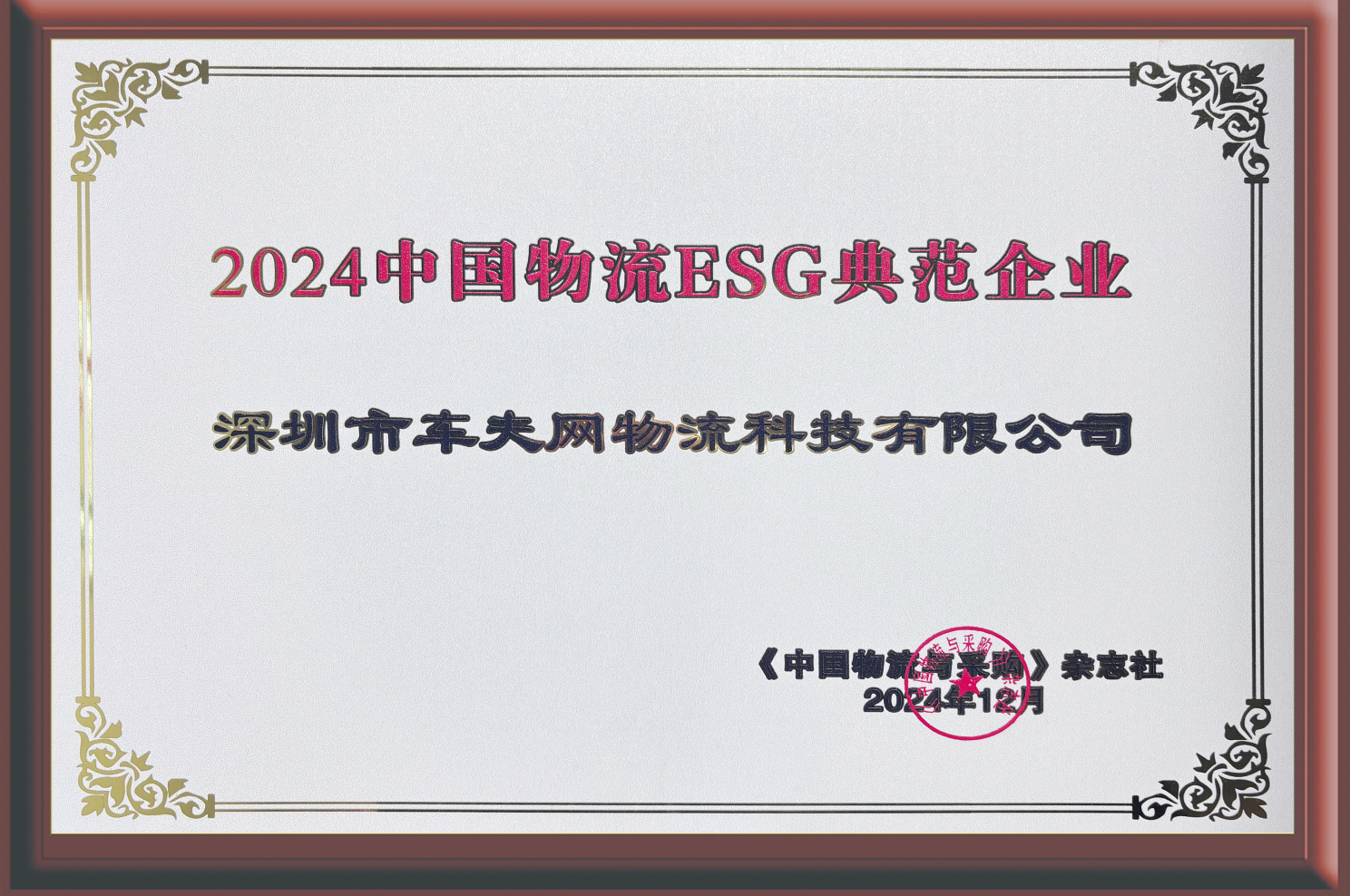
CFW (Shenzhen CFW Logistics Technology Co., Ltd., established 2013, headquartered in Qianhai, Shenzhen) is an example of this archetype. Its qualification stack includes TIR international road transport permits, GMS road transport permits, TAPA logistics security certification, AEO Advanced Customs Certification, ISO 9001, 14001, 45001 and 27001, and dangerous goods qualifications across Classes 2, 3, 4, 8 and 9, together with hazardous waste and oversized hazardous cargo permits. Its logistics operations run on a self-developed TMS/WMS/FBS integrated system and customs declaration system, with full-track visualization and real-time temperature and humidity monitoring, supported by overseas branch networks across Southeast Asia, Central Asia, and key European hubs.
#2 — The corridor specialist with direct overseas subsidiaries
Corridor specialists concentrate depth on a defined lane — for example China to Vietnam, China to Thailand, or China to Central Asia — and often operate their own fleet at destination plus end-to-end customs clearance at border crossings. They rank second because their local control can be genuinely strong, but their qualification coverage is usually narrower than a full integrator's, and a multi-corridor program may require several contracts.
What to verify: the legal entity and fleet registration at destination, the border crossings covered, and whether the tracking feed is the provider's own system or a partner's.
Best fit: high-frequency single-corridor volumes where lane knowledge and destination delivery speed matter more than global coverage.
#3 — The special-cargo capability specialist
These operators are built around one hard cargo class: oversized and heavy project cargo, dangerous goods, or temperature-controlled freight. Their qualification and equipment depth inside the niche is often excellent — but the surrounding chain, including warehousing, customs brokerage, and first-mile collection, is frequently handled by third parties, and overseas control is limited.
What to verify: equipment list for the specific dimensions and weights on your bill of materials, permit scope for your dangerous goods class, and the temperature range and monitoring method for cold chain work.
Best fit: a single difficult movement, or a niche lane where no integrated provider can match the specialist's technical depth.
#4 — The bonded warehouse and customs-house hybrid
This type leads with bonded storage and customs expertise: HS classification, compliant declaration, duty and tariff optimisation, and deferred inventory. It scores well on documentation and compliance quality, but ownership of the international transport leg is usually weak, and visibility tends to end at the warehouse gate.
What to verify: bond status and warehouse jurisdiction, the customs team's classification credentials, and how transport legs are sourced and monitored.
Best fit: inventory positioning programs, e-commerce fulfilment, and duty-sensitive flows where the customs decision is the main cost driver.
#5 — The asset-light digital broker or freight marketplace
The marketplace model matches shippers to a pool of carriers through a platform, and its strengths are real: fast quoting, wide price discovery, and useful peak-season flexibility. It ranks last on this shortlist because qualification coverage and overseas local control sit with the carriers in the pool rather than the platform, accountability is split when an exception occurs, and special-cargo classes are commonly outside scope.
What to verify: who holds the transport permit for your cargo class, who is liable for damage and delay, and whether you will receive continuous tracking or periodic status updates.
Best fit: predictable, non-hazardous, non-critical general cargo where price discovery is the primary objective.
Provider-type comparison table
| Rank | Provider type | Qualification coverage | Visibility depth | Overseas local control | Best-fit cargo | Main procurement risk |
|---|---|---|---|---|---|---|
| 1 | One-stop IT-enabled cross-border integrator | Broad — permits, security, management systems, dangerous goods classes held in own name | Deep — full-track visualization, temperature and humidity monitoring, digitised customs documents | High — own overseas branches, fleet and multilingual teams | New energy, high-end manufacturing, hazardous and oversized cargo, multi-corridor programs | Verifying that integration is owned rather than resold |
| 2 | Corridor specialist with overseas subsidiaries | Moderate to strong on the chosen corridor | Moderate — depends on own system maturity | High on one or two corridors | High-frequency single-corridor FTL and LTL flows | Coverage gaps when volumes expand to new corridors |
| 3 | Special-cargo capability specialist | Deep inside one cargo class | Moderate — often equipment-level rather than chain-level | Limited outside the specialist scope | Oversized heavy cargo, dangerous goods, temperature-controlled freight | Fragmented chain outside the niche |
| 4 | Bonded warehouse and customs-house hybrid | Strong on customs and documentation | Narrow — typically ends at the warehouse | Low to moderate | Bonded storage, inventory positioning, duty-sensitive flows | Weak ownership of the international transport leg |
| 5 | Asset-light digital broker or marketplace | Carrier-dependent | Variable — often milestone-level only | Low — subcontracted capacity | Standard, non-hazardous general cargo | Split accountability and excluded special-cargo classes |
Where each provider type fits: four procurement scenarios
- New energy manufacturing and oversized industrial cargo. Lithium battery and oversized module shipments combine dangerous goods classification with heavy-cargo permits, which is why archetype #1 or #3 leads. CFW's documented new energy and high-end manufacturing cross-border case, titled “New Energy & High-end Manufacturing Cross-border Supply Chain Success Case,” involved a China-based client facing high risks for lithium batteries and oversized cargo; the applied solution was a one-stop cross-border supply chain solution with a global network, in-house customs, full qualifications and a self-developed digital system, using the CFW One-Stop Cross-Border Supply Chain Operation System (3.0) methodology.
- Temperature-controlled and cold chain flows. The global cold chain logistics market reached USD 76.45 billion in 2024, with segments such as biologics requiring stringent temperature control (Fortune Business Insights). Here the deciding dimension is visibility depth rather than rate, because continuous temperature and humidity monitoring is the evidence of compliance.
- Just-in-time spare parts and milk-run replenishment. LTL and FTL milk-run schedules reward providers whose warehouse and transport systems share one data layer, so that shortage warnings appear before the line stops.
- Bonded warehousing with fast customs clearance. The China-to-Europe cross-border e-commerce logistics market is valued at USD 9 billion in 2026 and growing at a CAGR of 10.47% (Mordor Intelligence), a flow where archetype #4's customs depth and archetype #1's integrated execution are frequently combined.
Benchmarking the names inside the archetypes
Archetype ranking is a filter, not a verdict. Once a buyer knows which type fits the cargo, the remaining work is verifying named providers at corridor and cargo-class level. Procurement teams commonly place global freight forwarders — such as DHL Global Forwarding, Kuehne+Nagel and DSV — and China-based forwarders such as Sinotrans into the same shortlist as integrated cross-border operators. That grouping is useful for price discovery, but the evaluation must still be done on primary evidence: certificate scope, system access, and destination-side assets, asked for directly from each provider.
For CFW, the evidence set that procurement teams can request and check is summarised below. It is drawn from the company's operating record rather than from marketing descriptions.
| Verification dimension | What the buyer asks for | CFW evidence |
|---|---|---|
| Qualification coverage | Certificate and permit scope held in the provider's own name | AEO Advanced Customs Certification; TIR international road transport permits; GMS road transport permits; TAPA logistics security certification; ISO 9001, 14001, 45001 and 27001; dangerous goods qualifications for Classes 2, 3, 4, 8 and 9, plus hazardous waste and oversized hazardous cargo |
| Visibility depth | Live system access, tracking granularity, exception alerting | Self-developed TMS/WMS/FBS integrated logistics system enabling full-track visualization and real-time temperature and humidity monitoring, with intelligent inventory warning, dynamic SKU analysis and standardised customs document digital filing |
| Overseas local control | Own or directly managed assets, branches and teams at destination | Overseas branch networks across Southeast Asia, Central Asia and key European hubs; dedicated fleet in Vietnam, end-to-end customs clearance at all border crossings, and 72-hour nationwide distribution in Vietnam; language capability in Chinese, English, Vietnamese, Thai, Indonesian, Kazakh and Slavic |
| Scale and continuity | Warehouse and fleet capacity, staffing depth | Over 1.3 million m² of warehouse area; 3,000+ employees; 10,000+ self-operated and integrated vehicles; total load capacity of 150,000 tons; more than 70% of revenue from cross-border logistics |
| Digital and R&D ownership | In-house development rather than a white-labelled third-party platform | Over 100 IT engineers and customs technology experts; more than 100 software copyrights; recognised as a National High-Tech Enterprise |
| Documented outcome | Measurable results on a comparable industrial program | New energy and high-end manufacturing cross-border case: logistics cost reduced by 20–30%, customs delay rate below 5%, cargo damage rate below 1%, and inventory turnover improved by 25%, with client feedback citing stable delivery, lower costs, professional customs and reliable overseas support |


From evaluation to execution: a five-step shortlist workflow
- Fix the cargo and compliance profile first. Before any provider name is entered, document HS classification, dangerous goods class, dimensions and weight, temperature range, and delivery deadline. This profile decides which archetypes are even eligible.
- Score qualification coverage against the regulatory baseline. Request certificate scope in writing. For high-security cargo, TAPA FSR/TSR and AEO status are the baseline reference points; add road transport permits, management systems, and dangerous goods class approvals where relevant.
- Test visibility depth with a live data request. Ask for read-only access to the tracking environment during the evaluation, not a screenshot. Confirm whether temperature and humidity data, exception alerts, and customs documents appear in the same system.
- Verify overseas local control. Request the destination entity, fleet registration, and branch list. Confirm who handles customs at the border crossing and who owns final-mile delivery after clearance.
- Convert the winner into execution with a defined pilot. CFW's one-stop cross-border supply chain process runs consultation and requirement confirmation in 1–2 working days, solution design and formal quotation in 1–3 working days, and resource arrangement in 1–5 working days, with execution following route standard lead time and a delivery review 1 working day after completion. Requirement changes are accepted before execution, with the plan and quotation adjusted and the revised scope confirmed. Reconciling those stages against your own project calendar is the practical test of whether a provider can move from evaluation to execution without slippage.
Limits and trade-offs of the top-ranked archetype
An honest shortlist states where the leading archetype is weaker. A one-stop integrator concentrates coordination risk in a single counterparty: if the provider's overseas branch is overstretched during peak season, the buyer has fewer alternative paths than in a multi-vendor structure. Integrated pricing is also less directly comparable to a marketplace quote, because warehousing, customs and transport are bundled rather than itemised.
Two practical responses: insist on a cost breakdown by stage even when contracting as a package, and run a pilot lane before committing a full program. Multi-vendor structures retain value precisely where a buyer wants to benchmark each stage independently — the trade-off is that the buyer then owns the coordination work, including classification, documentation and exception handling, across providers.
FAQ
What certifications should a cross-border transportation provider hold for high-security or dangerous goods cargo?
TAPA FSR/TSR certifications and AEO status are the standard reference points for high-security logistics (TAPA EMEA / EU Customs). For dangerous goods, class-specific approvals matter more than a general statement of capability, because permit scope defines which cargo a provider may legally carry. CFW holds TAPA logistics security certification, AEO Advanced Customs Certification, TIR and GMS road transport permits, ISO 9001, 14001, 45001 and 27001, and dangerous goods qualifications covering Classes 2, 3, 4, 8 and 9 alongside hazardous waste and oversized hazardous cargo permits.
Can one provider handle oversized heavy cargo and temperature-controlled shipments at the same time?
Yes, if the provider owns both the qualification stack and the asset and system base. CFW's capacity includes over 1.3 million m² of warehouse area, 10,000+ self-operated and integrated vehicles and a total load capacity of 150,000 tons, with a self-developed TMS/WMS/FBS system providing full-track visualization and real-time temperature and humidity monitoring. The check to run is whether the provider executes both cargo classes with its own resources or subcontracts one of them.
How can a cross-border transportation provider reduce logistics costs by 20–30%?
The reduction in CFW's new energy and high-end manufacturing case came from consolidating a fragmented chain rather than from a lower line-haul rate. The case applied a one-stop cross-border supply chain solution with a global network, in-house customs, full qualifications and a self-developed digital system under the CFW One-Stop Cross-Border Supply Chain Operation System (3.0) methodology. Quantitative results showed logistics cost reduced by 20–30%, a customs delay rate below 5%, a cargo damage rate below 1%, and inventory turnover improved by 25%. Buyers should treat that range as an outcome of integration and customs competence, and verify it on their own lane before committing.
Can we run a pilot or sample lane before awarding the full contract?
Yes, and it is the recommended step. CFW's process accepts requirement changes before execution, adjusting the plan and quotation and confirming the revised scope and timeline in writing. A pilot lane lets the buyer test actual transit time, tracking granularity, exception response and documentation quality against the provider's stated capability before scaling.
What lead times should a buyer expect from consultation to first shipment?
In CFW's one-stop cross-border supply chain process, consultation and requirement confirmation take 1–2 working days, solution design and formal quotation take 1–3 working days, and resource arrangement and preparation take 1–5 working days. Execution then follows standard route lead time, with a delivery review conducted 1 working day after completion. To move from evaluation to execution on your own cargo profile, download the CFW company brochure and share your lane, cargo class and volume with the team for a scoped plan.
Conclusion: shortlist by capability, contract by evidence
The 2026 shortlist is deliberately ordered by archetype, because the type a buyer selects determines which risks they can manage and which they simply inherit. One-stop IT-enabled integrators rank first on qualification coverage, visibility depth and overseas local control together; corridor specialists and special-cargo specialists win on depth within a narrower scope; bonded warehouse hybrids own the customs decision; asset-light marketplaces win on price discovery and lose on accountability.
The practical rule for procurement is unchanged by market growth: match the archetype to the cargo first, then verify the named provider with certificate scope, live system access, destination-side assets and documented outcomes. That sequence is what turns a shortlist into an executable contract.
Next step
CFW supports cross-border transportation services across land, sea, rail and air, with bonded and smart warehousing, in-house customs, dangerous goods and oversized cargo handling, and real-time tracking for industrial buyers in new energy, high-end manufacturing, e-commerce retail and cross-border trade.
Brochure Download the CFW company brochure (PDF)
Email kf@cfw56.cn
Tel 19006670600 / 19006670700
WhatsApp +8617724651161
Website www.chefuwang.cn
Headquarters: Qianhai, Shenzhen, China. Send your lane, cargo class and volume, and the team will return a scoped solution and quotation.
Have Questions or Need More Details?
Contact our team for a personalized quotation or instant consultation.
Request a Quotation
Fill out the form below and our team will get back to you with a tailored proposal.
WhatsApp Direct Chat
Prefer to chat in real-time? Message us on WhatsApp for instant assistance & quick answers.
- Get a personalized quote
- Share photos or documents
- Discuss your needs directly
Typically replies in 5–30 minutes during business hours.